
Shanghai
Fudan University Shanghai Cancer Center
复旦大学附属肿瘤医院
- Grade 3A
Key specialties: Oncology · Respiratory & Thoracic
View hospital profile
Oncology · Treatment
Particle radiotherapy — proton and carbon-ion — for selected tumors at a specialist center in Shanghai, after the center reviews eligibility.
Last reviewed October 20, 2026
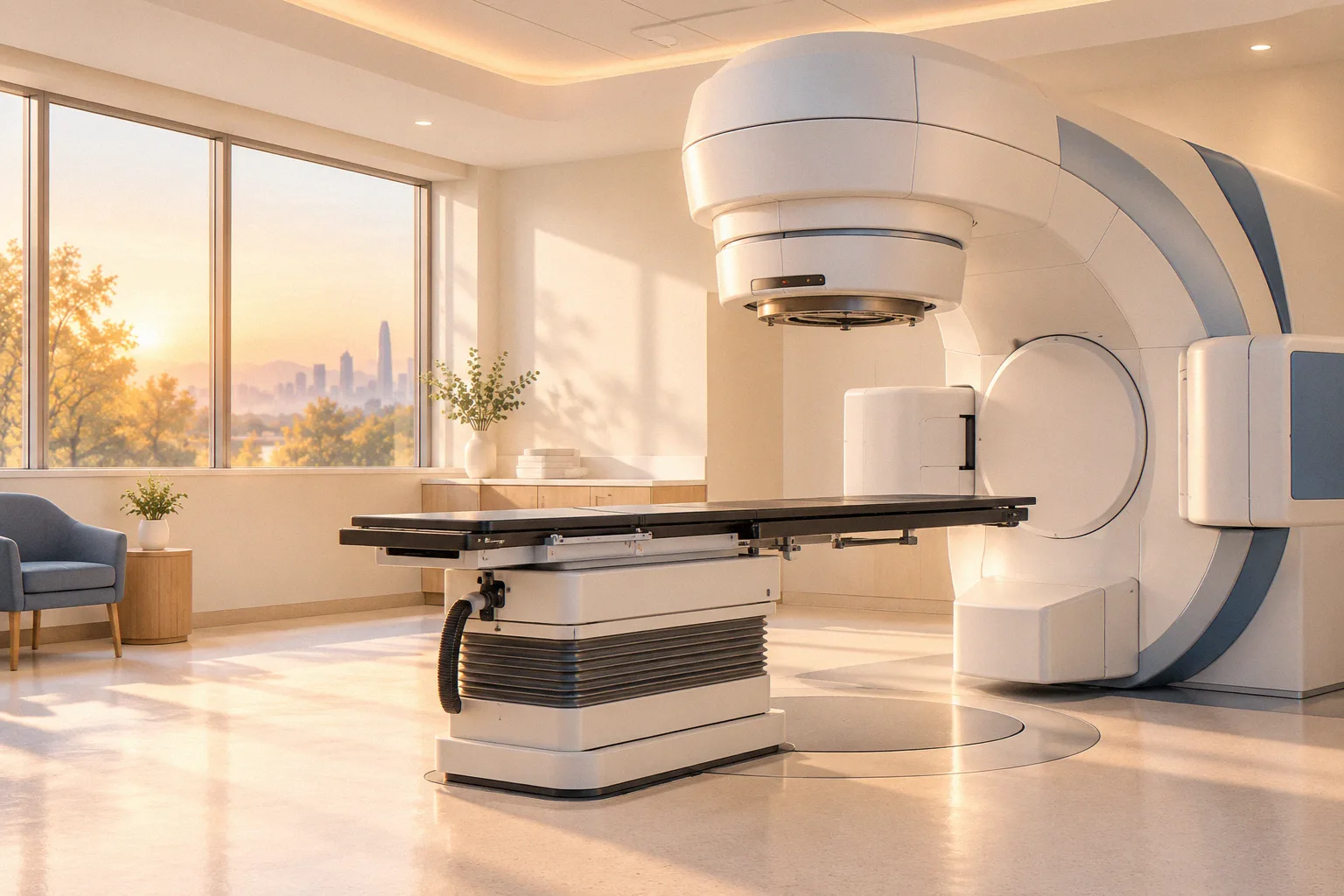
Proton and heavy ion (carbon-ion) therapy are forms of radiotherapy that deposit most of their energy at a defined depth, which can reduce dose to surrounding tissue for some tumors.
They are typically considered for selected localized tumors, such as certain skull-base, head and neck, and other tumors near sensitive structures. Many cancers are better treated with conventional radiotherapy, surgery or systemic therapy. Eligibility is decided by the particle therapy center after reviewing imaging, pathology and treatment history.
Final eligibility is decided by the treating hospital after reviewing your records.
Any language is fine; translation is arranged during the review.
Submit medical reportsWaiting times vary by hospital and are confirmed during the case review. Horcare matches by department strength for the condition, not by how famous a hospital is.
Step by step
Coordination steps are handled by Horcare; clinical steps are run entirely by the hospital.
Often 5–8 weeks including planning and the treatment course. The hospital confirms the timeline after its review.
Plan for a companion, accommodation near the hospital and interpreter support. Visa rules change: confirm with the Chinese embassy or visa center.
You send recent reports and imaging. Horcare replies personally within 24 hours and gives an initial assessment of suitable hospitals and departments within 72 hours.
The particle therapy center reviews recent MRI/CT, pathology and treatment history to decide whether particle therapy is appropriate.
Horcare coordinates the hospital documents needed for your visa application, airport pickup and accommodation near the hospital. Confirm visa requirements with the Chinese embassy or visa center.
Immobilization devices are made and planning scans taken; physicists and radiation oncologists prepare the treatment plan.
Treatment is given in daily sessions on weekdays over several weeks, as an outpatient in most cases.
You leave with translated discharge records. Horcare coordinates remote follow-up with the treating doctor and any return visits.
Cost
Indicative hospital costs for proton and heavy ion therapy in China are RMB 278,000 treatment fee per course at the Shanghai Proton and Heavy Ion Center; reported average total in-hospital cost about RMB 330,000, confirmed by the hospital's written quote.
| What | Who you pay | Amount |
|---|---|---|
| Hospital charges (consultations, tests, procedure, ward, medicines) | Paid directly to the hospital | RMB 278,000 treatment fee per course at the Shanghai Proton and Heavy Ion Center; reported average total in-hospital cost about RMB 330,000 — indicative, confirmed by the hospital's quote |
| Horcare coordination fee | Paid to Horcare, quoted in writing first | Quoted after your free case review |
| Travel and accommodation for patient and companion | Booked by you, with our help | Depends on city and length of stay |
| Initial case review | — | Free |
Source: Treatment fee: Shanghai Proton and Heavy Ion Center patient FAQ (sphic.org.cn). Average total in-hospital cost (radiotherapy, ward, tests and nursing): Beijing News reporting, 2025. Other centers set their own fees.
The case review is free, hospital bills are paid directly to the hospital with no markup, and Horcare's service fee is quoted in writing before any paid work. How payment works.
Request a free case reviewHospitals
These hospitals have departments that provide proton and heavy ion therapy. Listed alphabetically, not ranked; the right one depends on your diagnosis.
Shanghai
复旦大学附属肿瘤医院
Key specialties: Oncology · Respiratory & Thoracic
View hospital profile
Shanghai
上海市质子重离子医院
Key specialties: Oncology
View hospital profile
One dedicated bilingual coordinator works with you from the first inquiry to follow-up at home, supported by medical interpreters at consultations, admission and discharge.
You get a personal reply within 24 hours and an initial assessment within 72 hours. Hospital charges are kept separate from the coordination fee, and every clinical decision stays with the hospital. See how it works or read about Horcare.
Shanghai Proton and Heavy Ion Center offers both proton and carbon-ion therapy. Horcare coordinates its eligibility review and appointment.
Not in general. It may offer advantages for some tumor types and locations; for many others conventional radiotherapy is equally appropriate. Only the treating center can advise for your case.
Horcare does not publish a price list. The cost depends on the diagnosis, the hospital and the treatment plan, so the hospital gives its own quote after reviewing your records. You pay the hospital directly with no markup from Horcare; our coordination fee is quoted in writing before any paid work. Pricing is quoted after your free case review.
Last reviewed October 20, 2026
Last reviewed October 20, 2026
Last reviewed October 20, 2026
Last reviewed October 20, 2026
Share the diagnosis and we'll reply personally within 24 hours. No passport or full records needed to start.
No passport or full records needed to start · Hospital bills paid directly to the hospital, no markup